NDIS Vehicle Modification Guide
If you or someone you care for is using the National Disability Insurance Scheme, you might hear about vehicle modification. It can sound complex at first, but at its core, it is about something simple and powerful. It is about helping people get where they want to go, safely and independently.
What does the NDIS consider a vehicle
Defining what a vehicle is might feel a bit obvious, but in the NDIS it actually matters.
A vehicle is something that helps you get from one place to another. This is usually a car or van used for everyday things like getting to work, school, appointments or catching up with people.
You or a family member need to own the vehicle, or be planning to buy or lease one. If you do not own it, you need to use it regularly and have permission from the owner to make changes to it.
Some types of vehicles are not usually funded for modifications under the NDIS. These include:
- Motorbikes or scooters
- Trucks or heavy commercial vehicles
- Vehicles used mainly for business purposes
- Very old or unsafe vehicles
- Vehicles that are not safe or practical to use
- Bicycles, e-bikes and e-scooters (in most cases but not all)
This is because the NDIS focuses on everyday, practical transport that is safe, reliable and can be used regularly.
What is vehicle modification under the NDIS
NDIS vehicle modification means changing a vehicle so it works for you and your needs. Modifications can help you get in, travel safely or even drive, depending on your situation.
For many people, the right vehicle modification is life changing. It can mean more freedom, more choice and more control over daily life.
For example, NDIS vehicle modification can help you:
- Get in and out of a vehicle safely and with less effort
- Travel comfortably as a passenger
- Drive using controls that suit your body
- Stay in your wheelchair while travelling
- Get to work, appointments and social activities more easily
It is not just about transport. It is about independence and being part of your community.
Why NDIS vehicle modification matters
NDIS vehicle modification is about more than changing a car. It is about opening up your world.
The right setup can:
- Make everyday travel safer and easier
- Build confidence and independence
- Support access to work, study and social life
- Reduce reliance on others
- Create more opportunities to do the things you enjoy
For many people, it is the difference between staying home and being part of the community.

Young woman in a motorised wheelchair entering a minivan via side entrance ramp, demonstrating accessible transport through NDIS vehicle modifications.
Practical examples of vehicle modification
Vehicle modification is not one-size-fits-all. It is tailored to each person so it works for their body, their lifestyle and their goals.
Here are some of the most common examples:
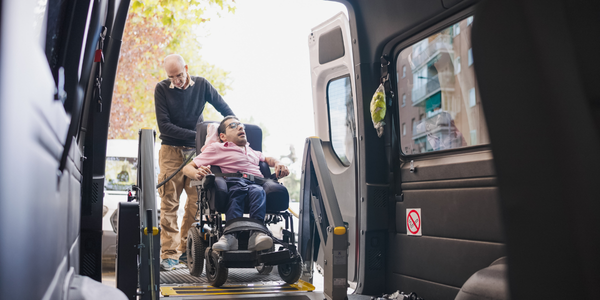
- Wheelchair ramps or lifts
Help people enter and exit a vehicle while staying in their wheelchair - Hand controls for driving
Allow someone to drive without using foot pedals - Steering aids or spinner knobs
Help with control when movement or strength is affected - Additional mirrors or camera systems
Improve visibility and support safer driving - Visual alert systems
Turn important sounds into visual signals - Simplified controls or labelling
Make using the vehicle easier to understand - Navigation systems with clear or voice-guided prompts
Support independent and confident travel - Calming changes inside the vehicle
Help reduce stress and make travel more comfortable
How NDIS vehicle modification works
Types of vehicle modification
NDIS vehicle modification can be simple or more complex.
- Minor vehicle modification
Small changes that improve access or comfort - Moderate vehicle modification
More tailored changes like hand controls or seating adjustments - Complex vehicle modification
Major changes like wheelchair hoists or fully modified vehicles
The more complex the modification, the more planning and expert input is needed to get it right.
How much NDIS vehicle modification costs
The cost of vehicle modification depends on what is needed.
- Minor changes are usually lower cost
- Moderate and complex changes can be more expensive
- Higher cost modifications need more evidence and planning
While this can feel like a big process, it is there to make sure you get the right solution for your needs.
Do you need a new vehicle
Not always.
- Your current vehicle may be suitable for modification
- Some modifications can be moved to another vehicle
- In some cases, a different vehicle may be needed
This will depend on your situation and what will work best long term.
Getting the right vehicle modification
Getting the right setup is the most important part of the process.
The NDIS may ask for:
- Information about your goals and how you want to travel
- A driving or functional assessment
- Reports from qualified professionals
- Quotes for the proposed modification
This is not about making things harder. It is about making sure the final outcome is safe, practical and truly supports your independence.
What the NDIS will and will not fund
NDIS vehicle modification must be reasonable and necessary.
This means it must:
- Be related to your disability
- Help you work towards your goals
- Represent value for money
The NDIS usually funds the modification itself, not the cost of buying the vehicle.
Modifications the NDIS won’t fund
The NDIS focuses on safety and function, not general upgrades or personal preference. This means some changes are not funded, including:
- Ambient lighting or decorative lighting upgrades
- Window tinting for style rather than medical need
- Upgraded wheels or rims
- Paint jobs, wraps or decals
- Sunroofs or panoramic roofs
- Luxury interiors such as leather seats or custom trims
- Upgraded speakers, subwoofers or sound systems
- In-car entertainment like screens or gaming systems
- Modifications for speed, power, performance or sport
- Engine upgrades, suspension changes or exhaust upgrades
- Modifications for business or commercial use
- General repairs, maintenance or servicing
If you are unsure, it is always best to check with your support coordinator or planner before making any decisions.

Customer choosing paint colour with red car in background, illustrating that NDIS vehicle modifications do not fund paint jobs, wraps or decals.
Who can help get vehicle modification in your NDIS plan
How Local Area Coordinators and NDIS planners can help
Local Area Coordinators and planners from the National Disability Insurance Agency help you get started.
- Talk with you about your goals and transport needs
- Help identify if vehicle modification is right for you
- Explain what information is needed
- Include funding in your plan if it meets the criteria
- Review your plan as your needs change
They help make sure your needs are recognised from the beginning.
How allied health professionals can help
Allied health professionals help turn your needs into the right solution.
- Assess how you move and function
- Recommend the safest and most suitable vehicle modification
- Complete assessments and reports
- Help you trial options where possible
- Support you to learn how to use your modified vehicle
Their role is key in making sure everything works safely and effectively.
How an NDIS support coordinator can help with vehicle modification
A support coordinator helps bring everything together.
- Guide you through each step of the process
- Connect you with the right professionals and providers
- Organise quotes and reports
- Help manage communication between everyone involved
- Support you to get everything set up properly
They help make the process smoother and less overwhelming.
If you would like help with vehicle modification, Lifely can support you. We offer support coordination to make things easier. Get in touch to learn more about our services.
How an NDIS plan manager can help with vehicle modification
A plan manager helps take care of the financial side.
- Process invoices and payments
- Make sure claims are correct
- Help you understand and track your funding
- Reduce stress by handling the admin
This means you can focus on using your supports with confidence.
If you would like help managing your NDIS funding, Lifely can support you. We offer plan management to make things easier. Get in touch to learn more about our services.
Final thoughts
NDIS vehicle modification is not just about getting from A to B. It is about having the freedom to live life on your terms.
Whether it is getting to work, visiting friends, attending appointments or simply going out when you want, the right vehicle modification can make it possible.
The process might feel big, but you are not alone. With the right support, you can find solutions that fit your life, support your goals and give you more independence every day.