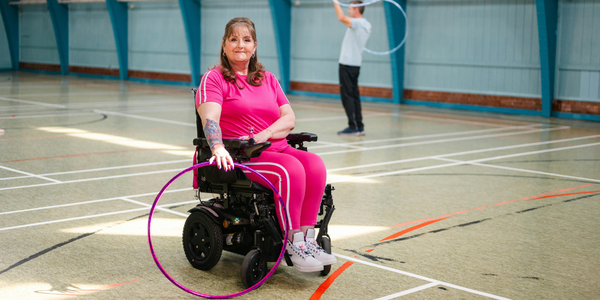
Guide to NDIS Assistive Technology
If you or someone you care for is using the National Disability Insurance Scheme, you may hear the term’ assistive technology’ or ‘AT’. It can sound technical, but the idea is actually quite simple.
What does assistive technology mean
Assistive technology is any equipment or device that helps a person do things they cannot do because of their disability.
It can also help people do everyday tasks more easily or more safely.
For example, assistive technology might help someone:
- Move around their home or community
- Communicate with others
- Prepare meals
- Shower or get dressed
- Take part in work, school or social activities
In short, it is about making daily life easier and more independent.
Why assistive technology matters
AT is not just about equipment. It is about independence, safety and quality of life.
The right device can:
- Reduce the need for support
- Increase independence
- Increase confidence
- Help people take part in their community
- Give carers more time and peace of mind
Practical examples of assistive technology
AT looks different for everyone. Below are some common, real-life examples across different types of disability and how they are used.
Physical disabilities
These affect movement, strength or coordination.
- Wheelchairs and mobility scooters
Help people move around safely at home and in the community - Shower chairs and grab rails
Make personal care safer and reduce the risk of falls - Modified cutlery or dressing aids
Help with eating and getting dressed when hand strength or coordination is limited

Accessible bathroom with grab rails, shower chair and step free shower, showcasing NDIS assistive technology that supports safe and independent daily living.
Learning disabilities
These affect reading, writing or understanding information.
- Text-to-speech tools
Read written content out loud - Speech-to-text tools
Help people write by speaking - Reading pens or scanners
Allow users to hear printed text
Sensory disabilities
These affect sight or hearing.
- Screen readers and magnification software
Help people with low vision or blindness use phones and computers - Hearing aids or cochlear implants
Improve access to sound and communication - Visual doorbells or vibrating alarms
Alert people to visitors or alarms without relying on sound
Young boy wearing a hearing aid, showing NDIS assistive technology that supports hearing, communication and everyday independence.
Intellectual or developmental disabilities
These affect learning and understanding.
- Visual schedules or picture boards
Help with routines and transitions - Reminder apps or simple planners
Support memory and organisation - Communication devices
Help people express needs and choices
Mental health conditions
These affect emotions and behaviour.
- Mood tracking or wellbeing apps
Help people understand and manage their mental health - Noise-cancelling headphones
Reduce overwhelm and support focus - Smart devices with reminders
Help with routines like medication and appointments

Teenage girl wearing noise-cancelling headphones, showing NDIS assistive technology that supports focus, sensory regulation and everyday independence
Neurological disabilities
These affect the brain and nervous system.
- Medication reminder devices
Help manage complex routines - Fall detection devices
Alert others if someone falls - Specialised keyboards or switches
Support computer use when movement is limited
Acquired brain injury
This includes brain injury after birth.
- Digital planners and alarms
Help with memory and routine - Smart home systems
Control lights, appliances and doors with simple controls, reduce fatigue through automation, and improve safety with alerts and monitoring - Fatigue management tools
Help people pace their energy

Woman with an acquired brain injury using a wall panel to control a smart home system, showing NDIS assistive technology that supports independence, safety and easy home access.
Speech and language impairment
These affect communication.
- Communication apps or devices
Help people speak using symbols or text - Voice amplifiers
Help people be heard more clearly - Speech practice apps
Support communication development
How assistive technology works under the NDIS
Different types of assistive technology
AT can be simple or more complex.
Low-risk items
These are:
- Easy to use and set up
- Available in shops
- Unlikely to cause harm
Examples include basic mobility aids or simple tools for daily tasks.
Higher-risk items
These are:
- More complex equipment
- May need training or professional setup
- May carry some risk if used incorrectly
An example could be a powered wheelchair or specialised equipment.
The NDIS may require advice from a qualified professional before you can get higher-risk items.
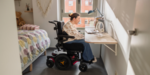
Young woman in a powered wheelchair using her laptop. A powered wheelchair is an example of higher risk NDIS assistive technology that may require advice from a qualified professional before funding is approved.
How much does assistive technology cost
The NDIS groups AT into three cost levels:
- Low cost: under $1,500 per item
- Mid cost: between $1,500 and $15,000
- High cost: over $15,000
The higher the cost, the more evidence and planning is usually needed before funding is approved.
Do you always have to buy it
Not always. Depending on your needs, you might:
- Buy the equipment
- Rent it for a short time
- Trial it before deciding
- Borrow or access it through a provider
This can be useful if your needs may change over time.
Getting the right assistive technology
The most important thing is getting the right support for your situation.
The NDIS may ask for:
- Information about your goals
- Evidence of how the equipment will help
- Advice from an allied health professional for more complex items
This helps make sure the AT is safe, suitable and good value.
What the NDIS will and will not fund
All AT funded by the NDIS must be reasonable and necessary.
This means it must:
- Be related to your disability
- Help you work towards your goals
- Represent value for money
The NDIS will not fund items that should be covered by other systems like health or education
Who can help you get assistive technology through the NDIS
How Local Area Coordinators and NDIS planners can help with assistive technology
Local Area Coordinators and planners from the National Disability Insurance Agency help you include technology in your NDIS plan.
- Talk with you about your goals and daily needs
- Help identify if assistive technology could support you
- Explain what information or reports are needed
- Include funding for AT in your plan if it meets the rules
- Review your plan if your needs change
They help make sure assistive technology is considered and funded in your plan from the start.
How allied health professionals can help with assistive technology
Allied health professionals help you choose the right AT and show how it will support you.
- Assess your needs and how you complete daily tasks
- Recommend the most suitable assistive technology
- Provide reports and evidence for NDIS funding
- Help you trial equipment before you buy it
- Support you to learn how to use your AT safely and confidently
This is especially important for more complex or higher-cost equipment.
How an NDIS support coordinator can help with assistive technology
A support coordinator can guide you through the process of finding and setting up the right equipment.
- Help you figure out what assistive technology you need
- Connect you with therapists and other professionals for advice
- Help gather reports and evidence for NDIS funding
- Organise trials or quotes for equipment
- Work with providers to get your AT set up and working well
This helps make sure your AT is right for you and works well in your everyday life.
If you would like help with assistive technology, Lifely can support you. We offer support coordination to make things easier. Get in touch to learn more about our services.
How an NDIS plan manager can help with assistive technology
A plan manager can make the financial side of AT simple and stress-free.
- Pay invoices for your assistive technology
- Make sure claims are processed correctly through your NDIS plan
- Help you understand how much funding you have for AT
- Keep track of your budget so you do not overspend
- Reduce stress by handling the admin and paperwork
This means you can focus on choosing the right supports, not managing payments.
If you would like help managing your NDIS funding, Lifely can support you. We offer plan management to make things easier. Get in touch to learn more about our services.
Final thoughts
Assistive technology is more than just equipment. It is about giving people more choice, more control and more independence in their everyday lives. The right support can make small tasks easier, open up new opportunities and help people feel more confident and connected to their community.
The NDIS process can feel complex, but you do not have to navigate it on your own. With the right advice and support, you can find assistive technology that truly fits your needs and goals, not just what is available.
If you are exploring AT, start by thinking about what matters most to you in your daily life. Then work with your support team to find the right solutions to help you get there.