Disability access key. How the MLAK unlocks everyday access
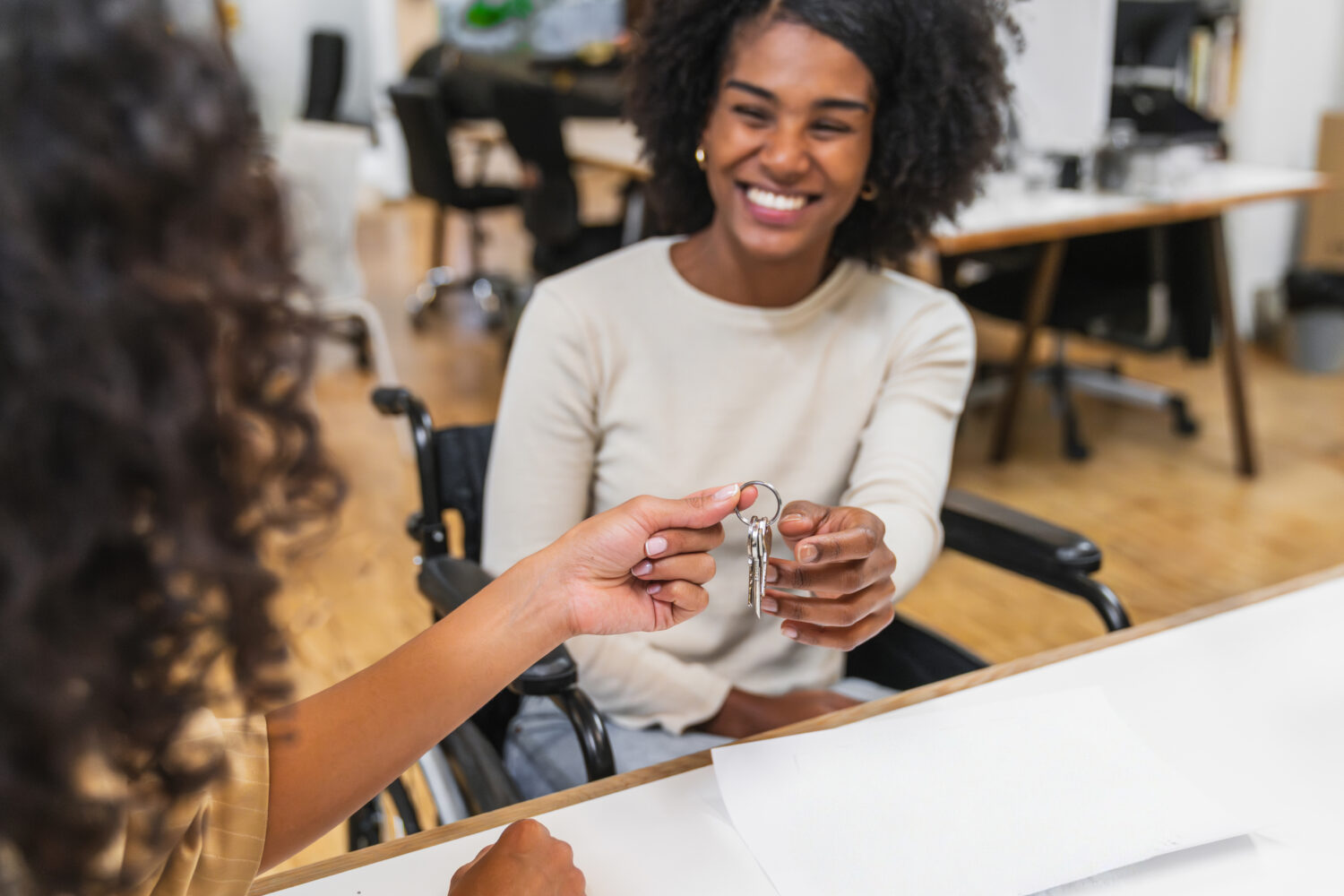
A disability access key might look like an ordinary silver key, but it plays a big role in everyday life.
It is the kind of key that lives on your key ring with your house keys, gets lost at the bottom of a handbag or backpack, or sits in that drawer full of keys from old houses, past jobs, and spares you have kept for other people.
But this disability access key can open much more than a front door.
For many people with disability, and for families, carers and support workers, it unlocks accessible toilets in parks and shopping centres, Changing Places bathrooms, accessible lifts, and inclusive playground equipment like Liberty swings.
This disability access key is officially called the Master Locksmiths Access Key, often shortened to MLAK. It is a simple system that helps people access public spaces across Australia with dignity and independence.
What is a disability access key?
A disability access key is a universal key designed to open locked accessible facilities.
The MLAK system was introduced in the 1990s after councils realised that locking accessible toilets and equipment reduced vandalism, but also prevented access for the people those facilities were built for.
The disability access key became the solution. Facilities stay locked for general use, while people who need access can unlock them themselves.
The system is managed by the Master Locksmiths Association of Australasia and is used nationally.
What facilities can you access with a MLAK?
A disability access key is commonly used in everyday public spaces, including:
- Accessible toilets in parks, shopping centres and transport hubs
- Changing Places bathrooms for people with high support needs
- Accessible lifts in some public buildings and shopping centres
- Liberty swings and inclusive playground equipment
- Some mobility scooter charging and storage areas
- Accessible picnic shelters and seating in public parks
Not every accessible facility uses the MLAK system, but many do. Facilities that use the MLAK system display a small MLAK symbol on the door.
Why are disability facilities locked?
Good question! Disability facilities are often locked to protect them.
Accessible toilets, Changing Places bathrooms, lifts and inclusive playground equipment can be costly to repair if they are damaged or misused. Locking them helps reduce vandalism and keeps them clean, safe and working properly for longer.
Some facilities are also locked because there are no staff on site. Locking doors is a way to manage access when no one is available to hand out keys or supervise the space.
The problem is that locked doors can also create barriers. People with disability, families, carers and support workers may be left searching for help or waiting when they need access quickly.
This is where the MLAK disability access key comes in. It allows facilities to stay locked while still giving people independent and dignified access when they need it.
Why does a disability access key matter?
A disability access key supports independence and privacy.
Without it, people may need to find staff, explain personal needs, or wait for assistance. With it, they can unlock facilities themselves and continue with their day.
People with disability often describe the key as one small thing that makes being out in the community easier. Carers often express the relief of being able to access a locked toilet quickly when their child or family member needs it. Support workers value not having to search for keys or staff.
It does not remove every barrier, but it reduces some of the everyday friction many people experience.
Who can apply for a disability access key?
A disability access key is available to people with disability, as well as to carers and support workers who assist them to access the community.
Disability organisations can also apply for disability access keys for their workers to use when supporting participants. This helps staff access essential facilities while out in the community with a participant.
People with certain health conditions can also apply for a disability access key. For some people, immediate access to toilets, changing places, or larger than average amenities is critical. This can include conditions such as Crohn’s disease, ulcerative colitis, bladder or bowel conditions, and other medical conditions that affect continence or mobility.
To apply, you usually need to complete an eligibility form. This is commonly supported by a doctor or a disability organisation.
If your NDIS goals allow, the cost of a disability access key may be included in your plan.
Apply for a MLAK access key online
How much does a disability access key cost?
From 1 July 2025, a disability access key costs $64 plus GST.
Some councils subsidise the cost for residents.
In Victoria and South Australia, Companion Card holders may be eligible for one free disability access key to support access to Changing Places facilities.
Free MLAK key application for Victorian and South Australian Companion Card holders
How to apply for a disability access key?
Applications for a disability access key are made through the Master Locksmiths Association of Australasia.
Once approved, the key is posted to you and can be used at MLAK enabled facilities across Australia.
Apply for a MLAK access key online
Finding places that accept a disability access key
Many disability access key facilities are listed on the National Public Toilet Map, which is useful when planning outings.
Some councils also publish local lists of accessible facilities that use the MLAK system.
When you are out and about, look for the MLAK symbol on doors to identify compatible facilities.
List of Liberty Swing locations
Does a disability access key solve everything?
Not entirely. There is no national requirement for all locked accessible facilities to use the disability access key system. Some locations still rely on staff held keys or local arrangements.
However, the system has remained in place for decades because it works. It provides a consistent and recognised way for people to access essential facilities across different regions.
It is a small key, but it can make a meaningful difference in everyday life.
Learn more with Lifely
At Lifely, we share plain English information to support access, inclusion and confidence in everyday life.
You can explore our other blogs and learning topics to learn more about disability access, the NDIS, carer supports and navigating public spaces with greater ease.
Check out our latest blogs and learning topics
Read our frequently asked questions (FAQs)